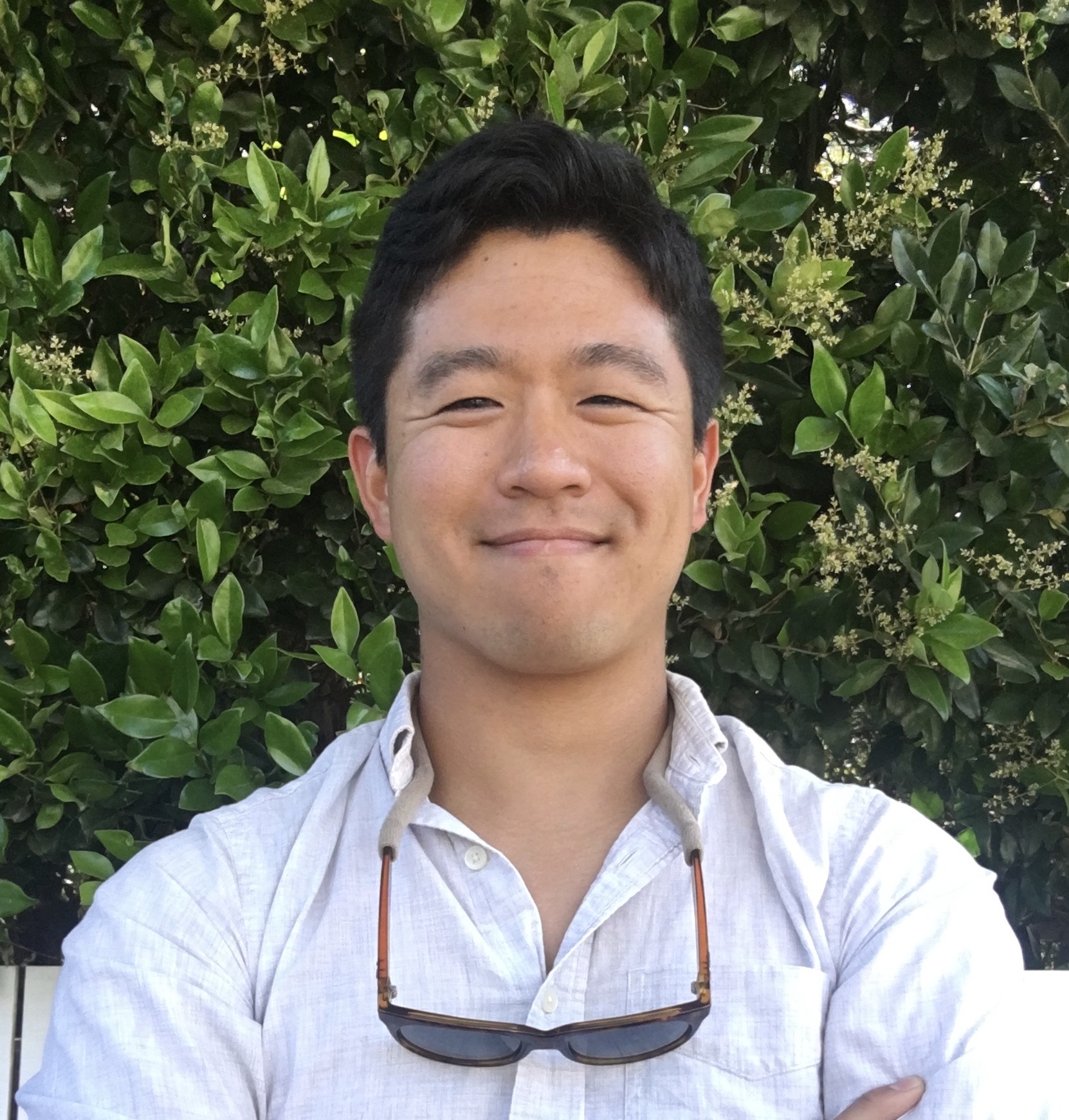
About Me
I am a landscape ecologist studying how climate and human management reshape ecosystems and the services they provide. I focus particularly on working lands, where ecological processes and human decisions are tightly intertwined. I combine multisensor remote sensing, machine learning, and causal inference to measure environmental change, uncover its drivers, and inform more resilient management of forests and agricultural systems.
I am currently a postdoctoral associate at the Environmental Data Science Innovation & Impacts Lab (ESIIL) at the University of Colorado, Boulder.
My research has been supported by fellowships and grants from NASA, USDA, and the Schmidt Foundation.
When I’m not thinking about forests and farms, you can find me enjoying the outdoors with my wife and our amazing daughter June.
My Research
My research examines how climate variability, land management, and ecological disturbances reshape working landscapes and the ecosystem services they provide. I focus on forests and agricultural systems, where processes such as growth, drought, harvest, and recovery interact across space and time.
I combine multi-sensor remote sensing, machine learning, and causal inference to address three connected challenges:
Measuring environmental change: Integrating optical, radar, LiDAR, and field observations to estimate changes in forest carbon, agricultural productivity, biodiversity, and other ecosystem properties.
Understanding dynamic landscapes: Developing models that represent transitions among growth, stress, disturbance, management, and recovery—and quantify uncertainty in both ecosystem states and their trajectories.
Connecting ecological change to people: Linking remotely sensed changes in ecosystems and animal activity to outcomes relevant to management and policy, including carbon storage, crop production, pesticide use, and pest-control services.
My goal is to move beyond mapping where change occurred toward explaining why it occurred, anticipating what comes next, and identifying opportunities for more resilient management.
I am also committed to open and inclusive environmental science. I develop accessible datasets and tools—including BATS (Bat-Aggregated Time Series)—and support students in applying quantitative methods to consequential environmental problems.
Experience
📄 Download my CV:
Lee CV (PDF)
Education
2026 Ph.D., Environmental Science & Management, Bren School, UCSB
2018 M.E.M., Environmental Management, School of the Environment, Yale University
2012 B.S., Biology, Pacific Union College
Appointments
2026 Postdoctoral Associate, ESIIL, CU Boulder 2025 Instructor of record, UCSB
2024-2025 Bren Environmental Leadership Fellow, UCSB
2023-2024 Arnhold Fellow, UCSB
2022 Microsoft AI for Earth Fellow
2020-2023 NASA MUREP PhD Fellow, NASA Goddard
2018 Research Assistant, NASA JPL
2016-2018 Paul Coverdell Fellow, Yale University
2015 Field Technician, Colorado State University
2013-2015 Field Biologist, International Gorilla Conservation Programme
2012-2015 Peace Corps Volunteer, Rwanda
Publications
In review
Lee, B., Heilmayr, R., Baylis, K., Noack, F., & Larsen, A.E. Weather radar reveals ongoing pest-control services from bats across agricultural landscapes. In revision, PNAS
Lee, B., Rich, A., Fatoyinbo, L., Thomas, N., Stovall, A., Olmedo, G.F., Ramirez, P.I., & Heilmayr, R. Tree-mendous changes: Quantifying changes in forest carbon using remote sensing and machine learning. In review, Remote Sensing of the Environment. (preprint: https://eartharxiv.org/repository/view/13334/)
2025
Lee, B. (co-first author), Sambado, S. (co-first author), Farrant, D.N., Boser, A., Ring, K., Hyon, D., Larsen, A.E.
Novel Bat‐Monitoring Dataset Reveals Targeted Foraging With Agricultural and Pest Control Implications.
Ecology and Evolution. 15(1). DOI:10.1002/ece3.70819
2024
Lee, B., Rich, A., Diehl, R.H., & Larsen, A.E.
BATS: Bat‐Aggregated Time Series—A Python‐based toolkit for landscape‐level monitoring of free‐tailed bats via weather radar.
Methods in Ecology and Evolution, 15(12), 2209-2215.
DOI:10.1111/2041-210X.14317
2023
Caraballo-Vega, J.A., Carroll, M.L., Neigh, C.S.R., Wooten, M., Lee, B., Weis, A., & Aronne, M.
Optimizing WorldView-2, -3 cloud masking using machine learning approaches.
Remote Sensing of Environment, 284, 113332.
DOI:10.1016/j.rse.2023.113332
2022
Thomas, N., Lee, B., Coutts, O., Bunting, P., Lagomasino, D., & Fatoyinbo, L.
A purely spaceborne open-source approach for regional bathymetry mapping.
IEEE Transactions on Geoscience and Remote Sensing, 60, 1-9.
DOI:10.1109/TGRS.2022.3152674
2020
Fisher, J.B., Lee, B., Purdy, A.J., Halverson, G.H., Dohlen, M.B., & Hook, S.J.
ECOSTRESS: NASA’s next-generation mission to measure evapotranspiration from the International Space Station.
Water Resources Research, 56(4), e2019WR026058.
DOI:10.1029/2019WR026058
Presentations
2026 ESA Conference (Invited Symposium: Complexity, Uncertainty, and Causal Understanding in Ecology): Continuous radar monitoring shows bats reduce insecticide use in California agriculture
2024 AGU Fall Meeting: BATS Toolkit & Forest Carbon Remote Sensing
2023 ESA Conference: BATS Toolkit
2022 Yolo Basin Foundation: Bat Populations & Machine Learning
2021 Pacific Union College: Remote Sensing & Ecosystem Services
Grants & Awards
2025 NSF LEAP Momentum Fellowship, Columbia University (declined)
2024 Bren Environmental Leaders Fellowship
2023 1st Place PhD Presentation, UCSB Bren Symposium
2021 Microsoft Azure AI for Earth Grant
2020-2023 NASA MUREP PhD Fellowship (Co-PI)
2020 Schmidt Environmental Sciences Research Accelerator Award
2019 Bren Forest Sustainability Fellowship, UCSB
2016-2018 Paul Coverdell Fellowship, Yale University
Teaching
2025 Instructor of Record, ESM 270P: Conservation Planning Practicum
2025 Instructor of Record, Introduction to Research
2025 TA, ESM 270: Conservation Planning
2024 TA, EDS 214: Analytical Workflows
2023 TA, ESM 263: GIS
2022 TA, EDS 232: Machine Learning
2019-2021 TA, ESM 280: Conservation Planning
2012-2015 High School Teacher, Rwanda (Biology, Chemistry, Physics, Math)
Service
2021-2026 Mentor, Undergraduate and Masters-level researchers
2024 Bren Environmental Leadership Program (K-12 Outreach)
2012-2015 US Peace Corps, Rwanda
Society Memberships: Ecological Society of America, American Geophysical Union
Reports: Strategy for Forest Connectivity (WCS-Yale White Paper)